
LDWS Compliance: A Guide for Indian Fleet Operators
A heavy vehicle can drift toward a lane boundary before its driver notices. For Indian fleet operators, that moment can put people, cargo, and nearby road users at risk. LDWS compliance involves more than adding a safety feature to a vehicle. You need to check the rules that apply to its category and make sure the equipment suits daily fleet work. Driver attention still matters, especially on long routes where fatigue can build. A warning can give a driver time to respond, but only if the system is approved, installed, and working as intended. Your decision affects vehicle selection, operating checks, and how drivers respond to alerts. This guide offers a clear route from understanding the system to checking requirements and putting it into fleet practice.
Key Takeaways
- Check the rules for each vehicle category and model.
- Confirm the system has the right approval evidence.
- Test alerts and fault signals during vehicle acceptance.
- Train drivers to respond to warnings and report faults.
- Expect detection limits when lane markings or visibility are poor.
What Does LDWS Detect, and How Does It Warn Drivers?
A forward-facing camera watches lane markings and estimates where the vehicle sits between them. A lane departure warning system alerts the driver when the vehicle drifts toward a lane boundary without an active turn signal.
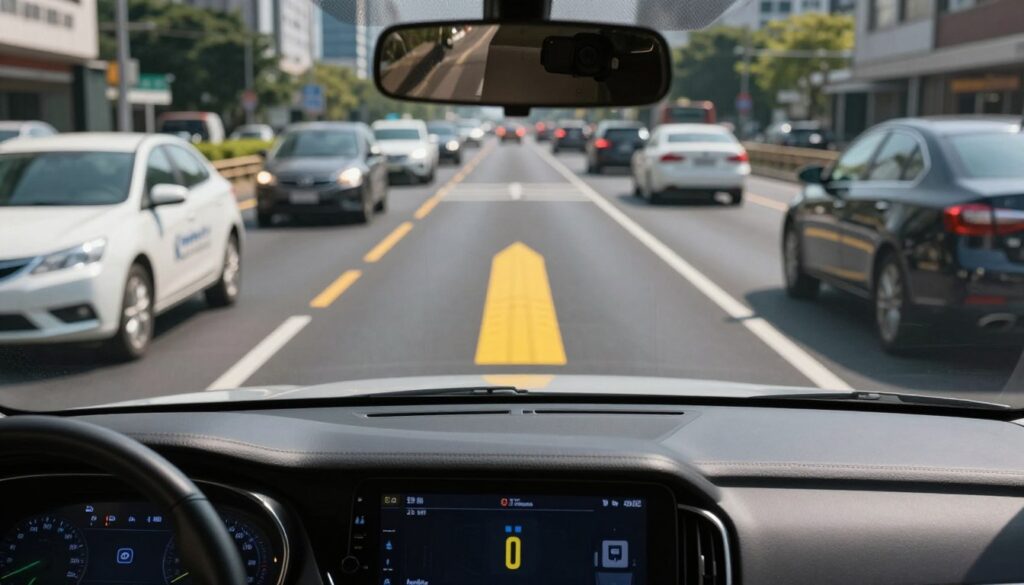
How the camera tracks lane position
The camera is commonly mounted near the rearview mirror or at the top center of the windshield. It reads visible lane markings and tracks the vehicle’s position relative to them.
A lane-detection algorithm is software that interprets camera images to identify lane markings and estimate the vehicle’s position. Image processing helps the system follow those lines as the vehicle moves.
Some systems combine cameras sensors with other inputs to support lane tracking. One described system classifies lane markings at distances of up to about 60 meters. The range and accuracy can vary by system and road conditions.
What alerts the driver receives
An unintended lane departure without an active turn signal can trigger a visual, audible, or haptic warning. A haptic warning uses touch, such as a vibration in the seat or steering wheel.
An active turn signal can prevent a warning during an intentional lane change. This helps the warning system focus on drift that may not reflect the driver’s plan.
The alert draws the driver’s attention to the vehicle’s path, so the driver can act. Sensing and alerts are only the basic function; fleet operators also need to check which vehicles and rules apply.
How Does LDWS Compliance Apply to Indian Fleets?
The stated deadlines differ by vehicle scope and by whether a model is new or already in production. Do not treat them as one deadline: the vehicle category and approval route shape your compliance decision.
Vehicle categories and key dates
The stated Indian roadmap says some safety features apply from April 2026 to new passenger vehicles carrying more than eight people, buses, and trucks. This statement covers a broad set of vehicles, not a single fleet type.
A separate heavy commercial vehicle ADAS mandate is stated to begin on October 1, 2027, for new models of heavy trucks and buses. Existing models already in production and on sale are stated to need upgrades by April 2028.
These dates describe different scopes and model stages. Before buying or upgrading vehicles, match the vehicle’s category and model status to the applicable Indian vehicle type-approval requirements.
Matching Indian approval checks to international requirements
Active safety systems aim to help before a crash by alerting a driver or supporting a response. They do not remove the need to check the approval path for each vehicle.
Confirm whether AIS-188 applies, along with the current vehicle type-approval requirements, with the relevant authority or testing body. Do not assume one category-wide rule covers every vehicle in your fleet.
UN Regulation No. 130 took effect in September 2013 and covers vehicles in categories M2, N2, M3, and N3. It sets an international framework for lane departure warning systems, but it does not by itself prove Indian type approval.
Use UN R130 as a reference when reviewing a system’s scope, not as a substitute for Indian approval. Once you identify the right rule, the next question is what performance and evidence the system must show.
What Must a Compliant LDWS Do?
A system that merely detects lane lines is not enough; it must also meet defined warning and fault-check behavior. The exact approval rule matters, so compare the required behavior with the vehicle’s test records.
Required warnings and system behavior
Under UN R130, an LDWS normally activates at speeds of 60 km/h and above. It should suppress a warning for an intentional departure, such as a lane change signaled by the driver.
The system must provide at least two warning methods: visual, tactile, or audible. The visual warning is yellow and indicates the direction of lane departure.
How to test lane departure warning system involves a controlled test at 65±3 km/h, with lateral deviation of 0.1-0.8 m/s. The warning must occur 0.3 m before the vehicle crosses the lane line.
How to verify performance and faults
A power-on self-test checks the system when the vehicle starts. The system must indicate faults and resume normal operation at the next ignition after being switched off.
Fault simulation checks whether the warning remains after the next ignition. Performance must not be adversely affected by magnetic or electrical fields, shown through compliance with Regulation No. 10, 03 Series of amendments.
| Requirement | Test or expected behavior | What the fleet should verify |
|---|---|---|
| Activation and lane departure | Normally active from 60 km/h; warning 0.3 m before crossing | 65±3 km/h test; 0.1-0.8 m/s lateral deviation |
| Alert type and direction | At least two alert types; yellow visual alert shows direction | Confirm alert modes and departure direction |
| Startup and fault indication | Power-on self-test; fault shown; normal function resumes next ignition | Run fault simulation and check next ignition |
| Electromagnetic compatibility | No adverse effect from magnetic or electrical fields | Check Regulation No. 10, 03 Series evidence |
Keep the test record with the vehicle’s approval documents. These technical checks lead to the operational steps fleets need to install, validate, and maintain the system.
How Should Fleets Implement and Maintain LDWS?
A fleet rollout works best when fitment, acceptance checks, and driver training are treated as one process. Use the same process across vehicles so gaps do not appear between installation and daily use.
Fitment, calibration, and acceptance checks
Check the vehicle and its approval scope before fitment. Then inspect the camera view and confirm that the lane-detection and warning behavior match the vehicle maker’s instructions.
Use this five-step checklist when adding vehicles or checking a new installation:
- Confirm vehicle and approval scope.
- Check camera placement and an unobstructed view.
- Verify lane-detection and warning behavior.
- Train drivers on alerts and intentional lane changes.
- Record faults and arrange qualified diagnosis.
Include the acceptance result in the vehicle record. A clear record helps you track when the feature was checked and what needs follow-up.
Driver training and fault response
Drivers need to know what each alert means and how an intentional lane change affects a warning. Make reporting a blocked camera or repeated fault part of routine vehicle checks.
To fix fault with lane departure warning system, inspect for an obstructed windshield camera and conditions that hide lane lines. If the warning persists, follow the vehicle maker’s diagnostic process or seek qualified service.
A single fix will not work for every vehicle, since systems and fault causes differ. Do not bypass the warning or alter calibration to clear a fault. Daily operating practice also needs to account for conditions that can limit LDWS performance on Indian roads.
Where Does LDWS Help, and Where Are Its Limits?
LDWS can give a driver an extra cue when a vehicle starts to drift, but it cannot make every road condition readable. Think of the warning as support, not proof that a collision will be avoided.
Situations where a warning can help
A lane departure warning can help a driver notice unintended drift and take action. That cue may matter during long drives or a brief drop in attention, when a small movement toward a lane edge can go unnoticed.
Drivers still need to watch the road and control the vehicle. A warning system cannot prevent accidents in every situation, and it does not replace careful driving or sound fleet practices.
Road and weather conditions that reduce detection
Faded or missing lane markings can make lane position harder to read. Heavy rain, fog, and bright sunlight can also limit camera visibility.
Unusual road markings may confuse detection, especially when temporary lines overlap older ones. In these conditions, a warning may arrive late or may not appear.
Use these operating reminders with drivers:
- Keep attention on the road.
- Respond to alerts promptly.
- Account for poor or missing markings.
- Report repeated blocked-sensor or malfunction alerts.
These limits are important on routes where road markings change or visibility shifts. A system that can intervene in steering differs from LDWS, which issues a warning for the driver to act on.
How Does LDWS Differ From Lane Keeping Assist?
If a system only alerts the driver, it is different from one that can also apply steering input. LDWS warns; lane keeping assist (LKA) can add gentle steering support.
LDWS gives a visual, audible, or haptic warning so the driver can correct the vehicle’s path. LKA may apply gentle steering support to help keep the vehicle within lane markings.
| Feature | LDWS | Lane keeping assist |
|---|---|---|
| Primary response | Alerts the driver | Can provide steering support |
| Steering input | No steering intervention | May apply gentle steering input |
| Driver’s role | Responds and corrects the path | Stays attentive and guides the vehicle |
When comparing lane keeping assist cars in India, check the exact feature name and behavior for each model. Availability and function can differ, so do not assume every car or fleet vehicle offers the same assistance.
Lane departure prevention assist may refer to steering intervention, not merely a warning. That distinction helps you read vehicle specifications and judge what action the system can take.
Conclusion
For a fleet operator, a dependable warning system starts with the right approval check and a verified installation. Both checks matter: a vehicle must meet the requirements that apply to its category, and the system must work in fleet conditions.
Review the vehicle documents before purchase or rollout, then arrange a qualified compliance and system-function check. Ask the relevant authority or testing body to confirm the applicable requirements, and document your fleet’s system checks as part of each vehicle’s record.
 Previous Post